How Payment Verification Timelines Shape Multi-Table Poker Strategies in Regulated Digital Environments
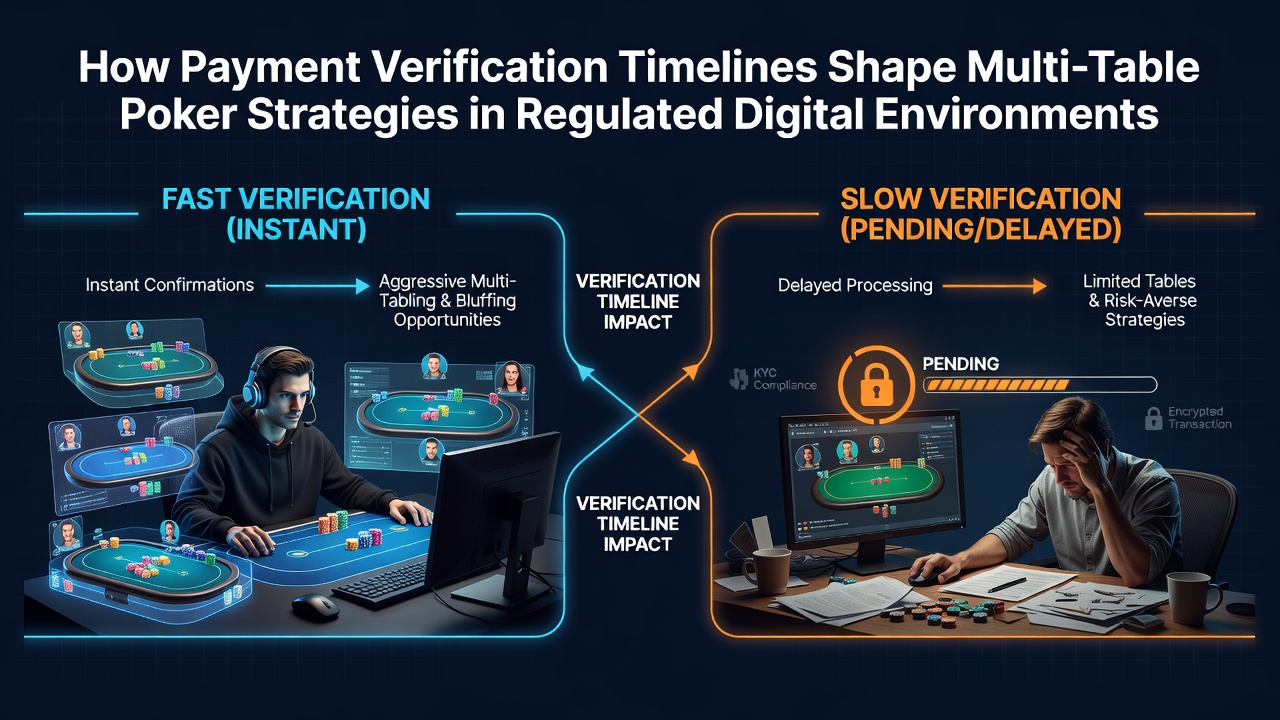
Payment verification timelines in regulated digital poker environments create distinct operational constraints for players who manage multiple tables simultaneously, and these timelines influence everything from session planning to bankroll allocation. Regulated platforms in jurisdictions such as New Jersey, Ontario, and several Australian states require identity checks, transaction reviews, and compliance holds that extend beyond the instant processing seen in unregulated spaces. Data collected through October 2026 shows that average verification windows for cashouts range from 24 hours in streamlined systems to five business days when additional documentation triggers manual review.
Regulatory Requirements and Processing Windows
Regulated markets impose layered verification steps that include source-of-funds checks, anti-money-laundering flags, and periodic account audits, and these steps directly affect how quickly players can move funds between tables or reload during extended sessions. Observers note that platforms licensed by the New Jersey Division of Gaming Enforcement typically complete initial deposits within minutes yet apply graduated holds on larger withdrawals, whereas Ontario's iGaming regime often routes mid-session cashouts through a 48-hour security review. Those who study player behavior across borders report that these differences force multi-table participants to maintain separate reserve balances rather than relying on rapid transfers from one account to another.
Impact on Simultaneous Table Management
Multi-table poker demands continuous attention to stack sizes, bet sizing, and table selection, yet verification delays interrupt that flow when a player needs to replenish a short stack or extract winnings before a major tournament series begins. Research indicates that sessions spanning four or more tables experience higher variance in effective bankroll because pending withdrawals cannot be redeployed immediately. Players often adjust by front-loading deposits at the start of a week and scheduling cashouts only after verification windows close, which reduces the frequency of mid-session interruptions.

Strategic Adjustments Observed in Practice
Experts have documented several adaptations that multi-table regulars adopt once they map out platform-specific verification patterns. One common approach involves spreading play across two or three licensed sites so that at least one account remains fully verified and liquid at any given moment, and this rotation minimizes downtime when a single operator places a temporary hold. Another documented tactic centers on timing cashouts to coincide with weekends or holidays when manual review queues tend to clear faster according to aggregated transaction logs from October 2026. Those who track these patterns also note that players reduce average table count during high-traffic periods such as Sunday majors, thereby lowering the probability that a verification delay will coincide with peak variance.
Bankroll segmentation becomes more granular under these conditions, and participants divide funds into active, pending, and reserve categories that reflect the known processing timelines of each platform. Data from industry reports shows that players who maintain at least 30 buy-ins in verified liquidity across multiple sites experience fewer forced session breaks than those who keep the bulk of their roll in a single account. What's interesting is how software tools that display real-time verification status have become standard among serious multi-tablers, allowing them to anticipate reload needs hours in advance rather than reacting after a table closes.
Regional Variations and Platform Choices
Differences across regulated markets create additional layers of strategy because verification speed varies by licensing authority and payment method. Australian state frameworks, for instance, often require source-of-funds declarations for any transaction above a set threshold, which lengthens processing compared with certain North American operators that accept pre-verified e-wallet transfers. Players who compete across these regions frequently maintain jurisdiction-specific accounts and migrate tables toward the site with the shortest current verification queue, and this migration pattern appears in session data collected through late 2026.
Payment method selection also factors into the equation, since regulated environments restrict options to approved processors that carry their own compliance overhead. Credit card deposits clear quickly in most cases, yet withdrawals routed through the same channel can trigger extended review periods that conflict with tight tournament schedules. Those who have examined transaction records report that players increasingly favor methods pre-approved for faster clearance even when fees run slightly higher, because the reduction in downtime outweighs the marginal cost during high-volume weeks.
Conclusion
Payment verification timelines in regulated digital poker environments continue to shape how participants structure multi-table sessions, allocate reserves, and select platforms. The patterns observed through October 2026 demonstrate that players who map these timelines and adjust rotation, segmentation, and timing practices maintain more consistent table volume than those who treat verification as an afterthought. As regulatory frameworks evolve, the same data-driven adjustments are expected to remain central to effective multi-table play across licensed markets.